Experiments with Blue and Green Verditers - Edward
In February I visited the Colour makers house in Appleby to attend a workshop with Mark Hilsden. Mark is very much embodying the experimental spirit of Alchemy and has been conducting numerous experiments in historical pigment creating.
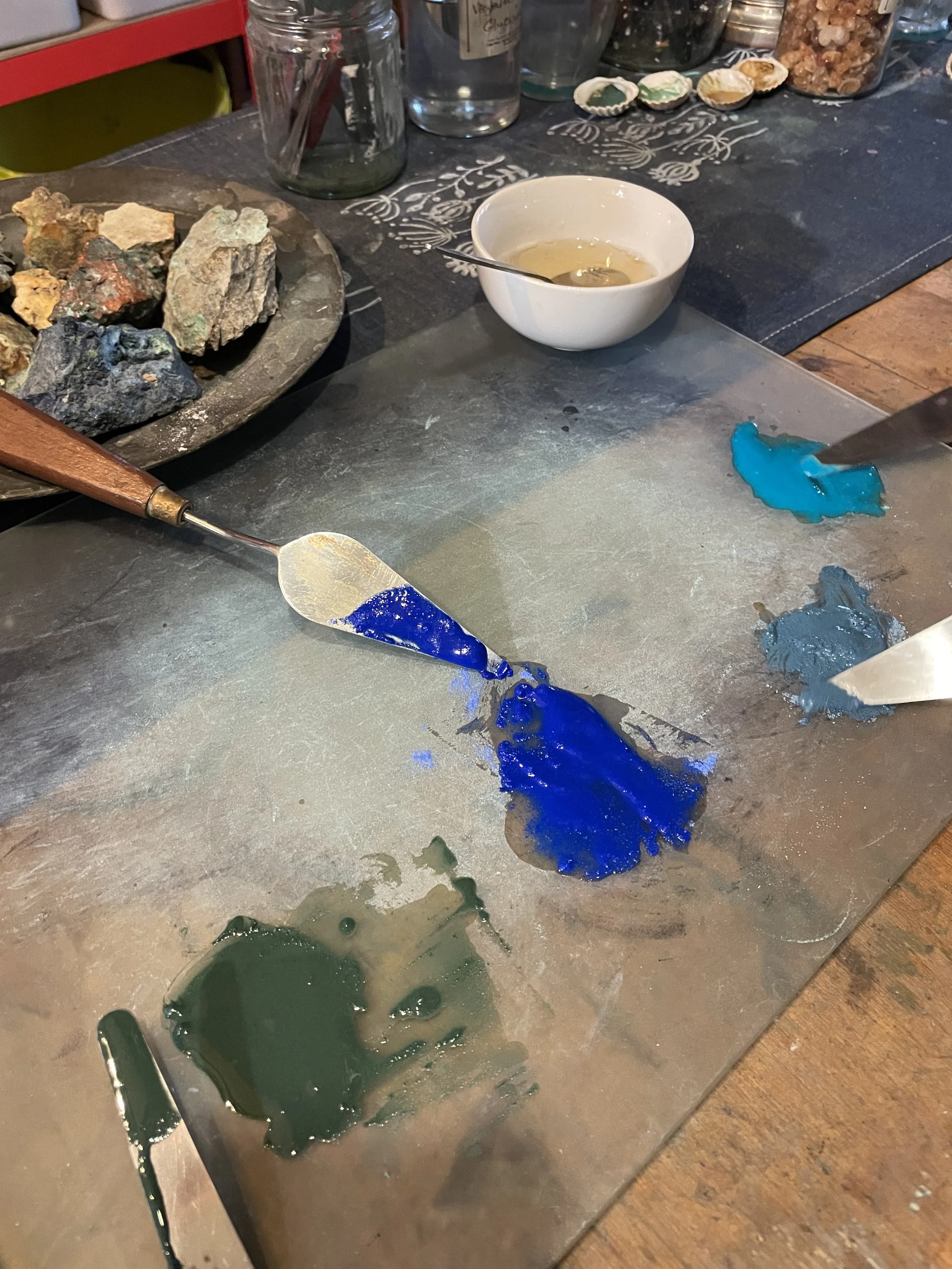
In his atmospheric workshop there are all manner of bottle and jars filled with colours and curious materials. It really does feel like travelling back in time, the building itself is four hundred years old. His investigations into a family of pigments collectively known as Verditers is what I'm particularly interested in and what was the main focus of the workshop.
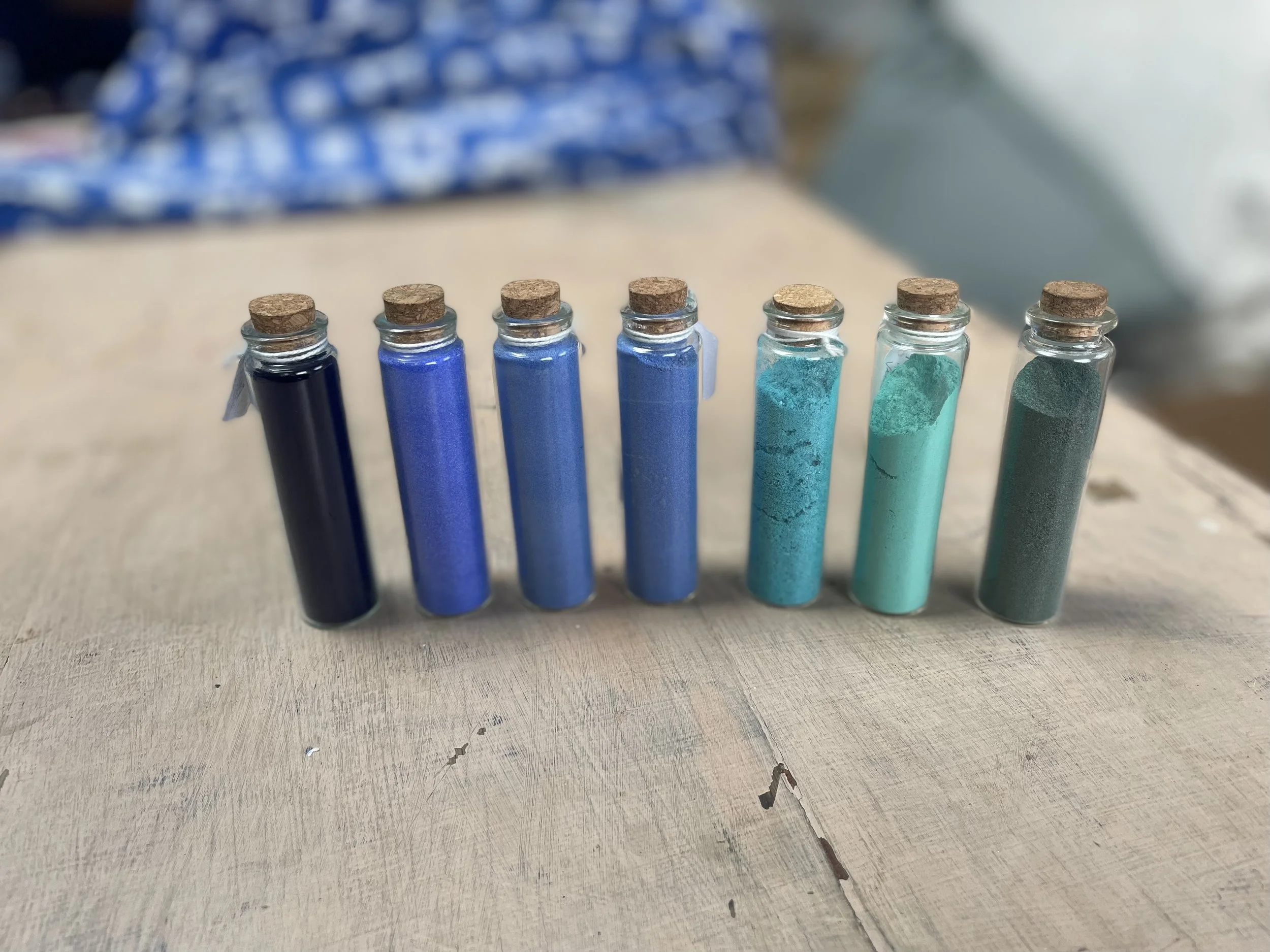
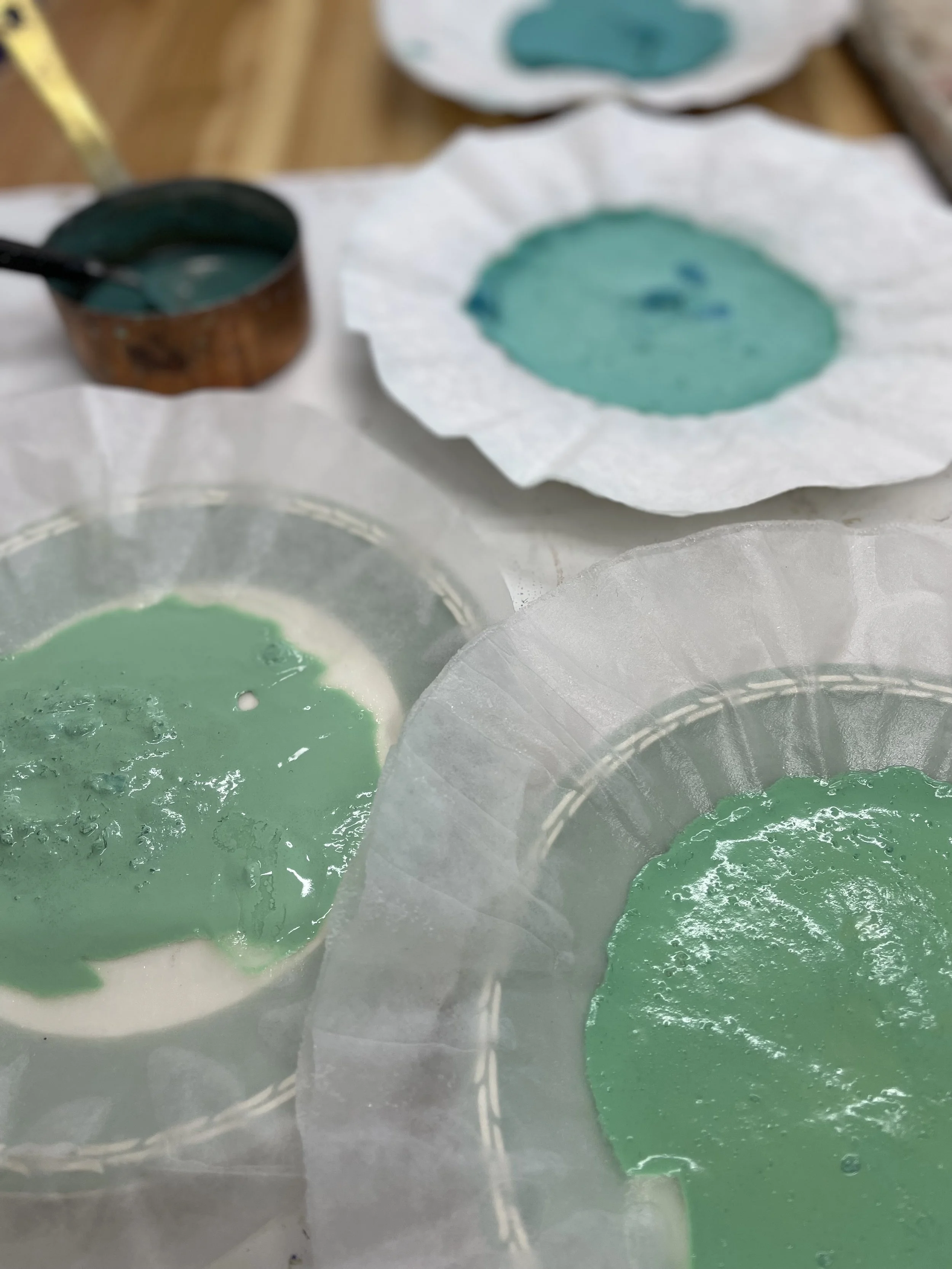
These pigments were discovered in late medieval times when the copper waste from silver mining was spilt onto chalk turning it green and in some circumstances blue. Essentially the pigments are formed of copper sulphate or nitrate bound to a type of carbonate such as chalk or limestone. This binding together results in a a range of hues from apple and mint greens, aquamarines, turquoises all the way through to deep blues like a winter sky. Mysteriously it's very hard to be certain which shade you might achieve and certain environmental conditions seem to make the difference. One of these is temperature with colder air resulting in blue. Somewhat poetically this means that the blues come into existence in winter and the greens in the summer.
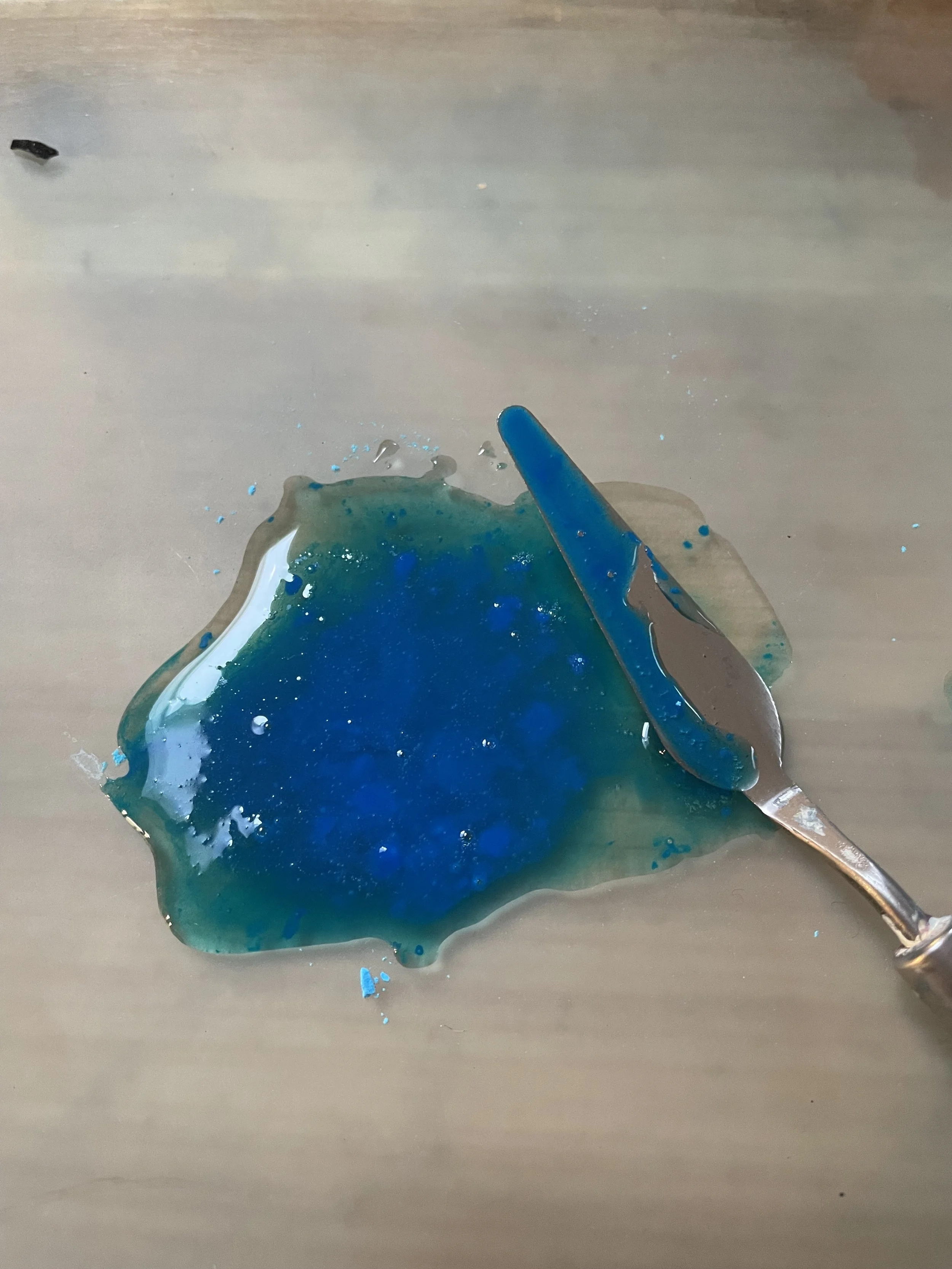
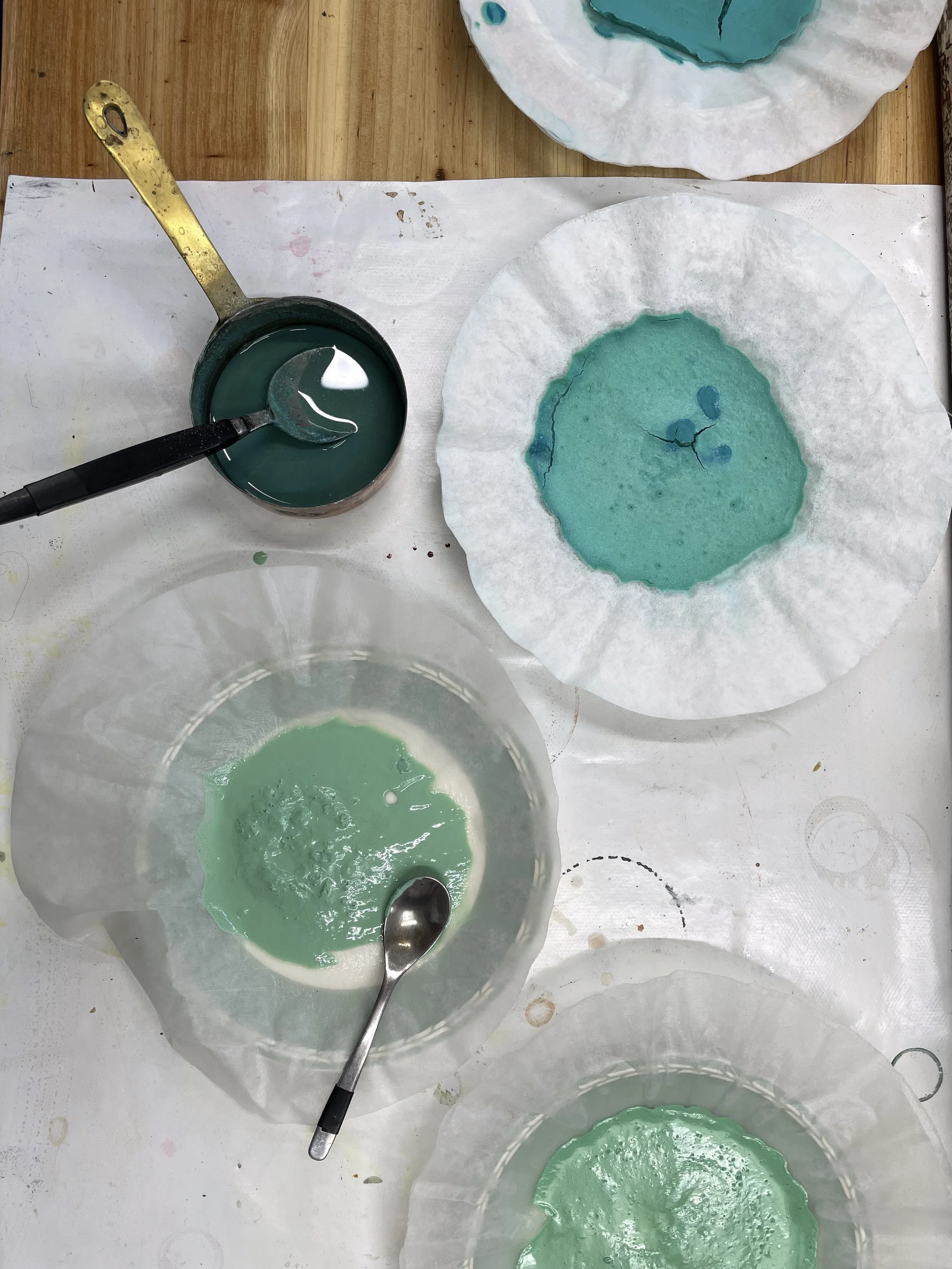
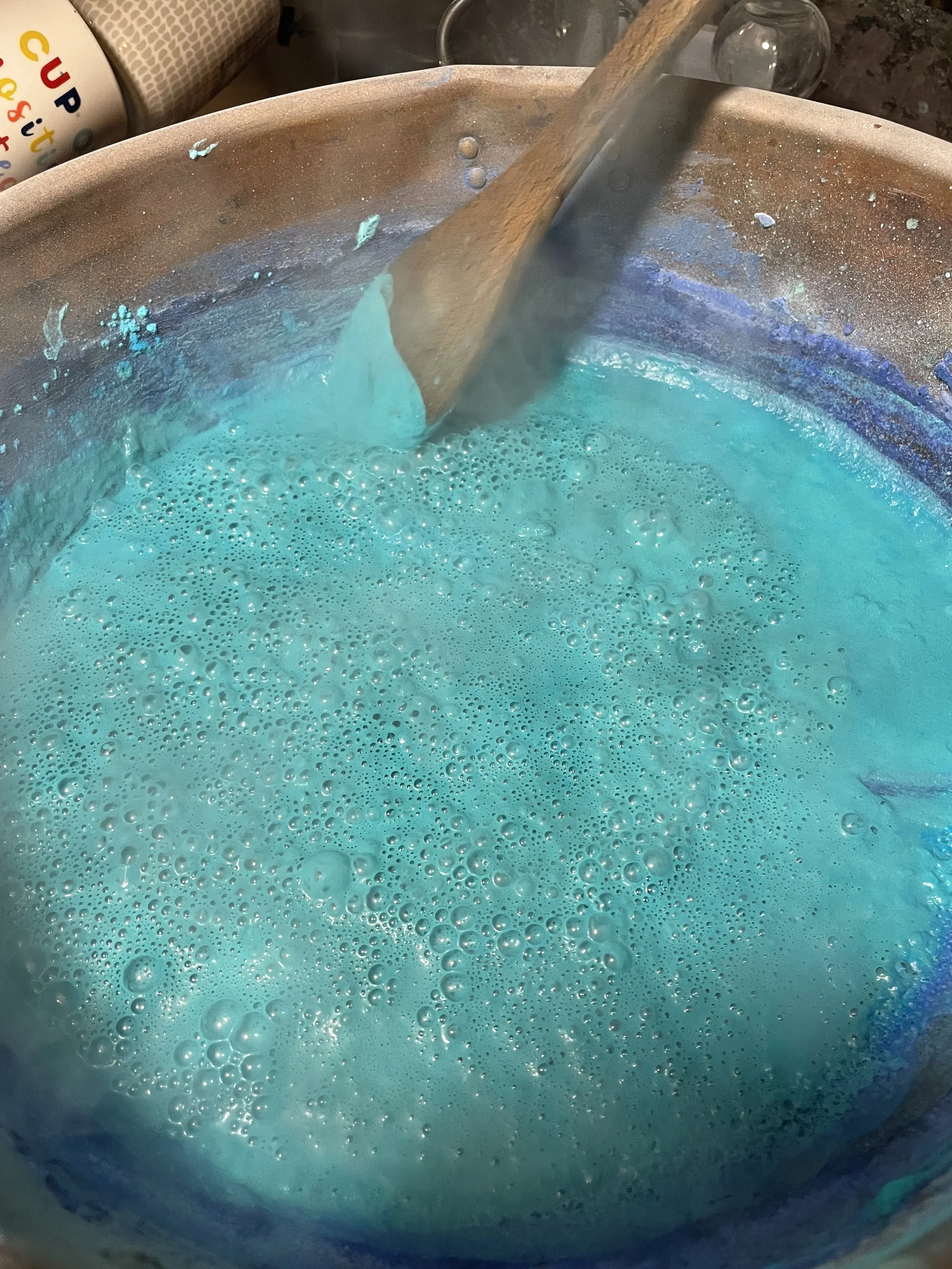
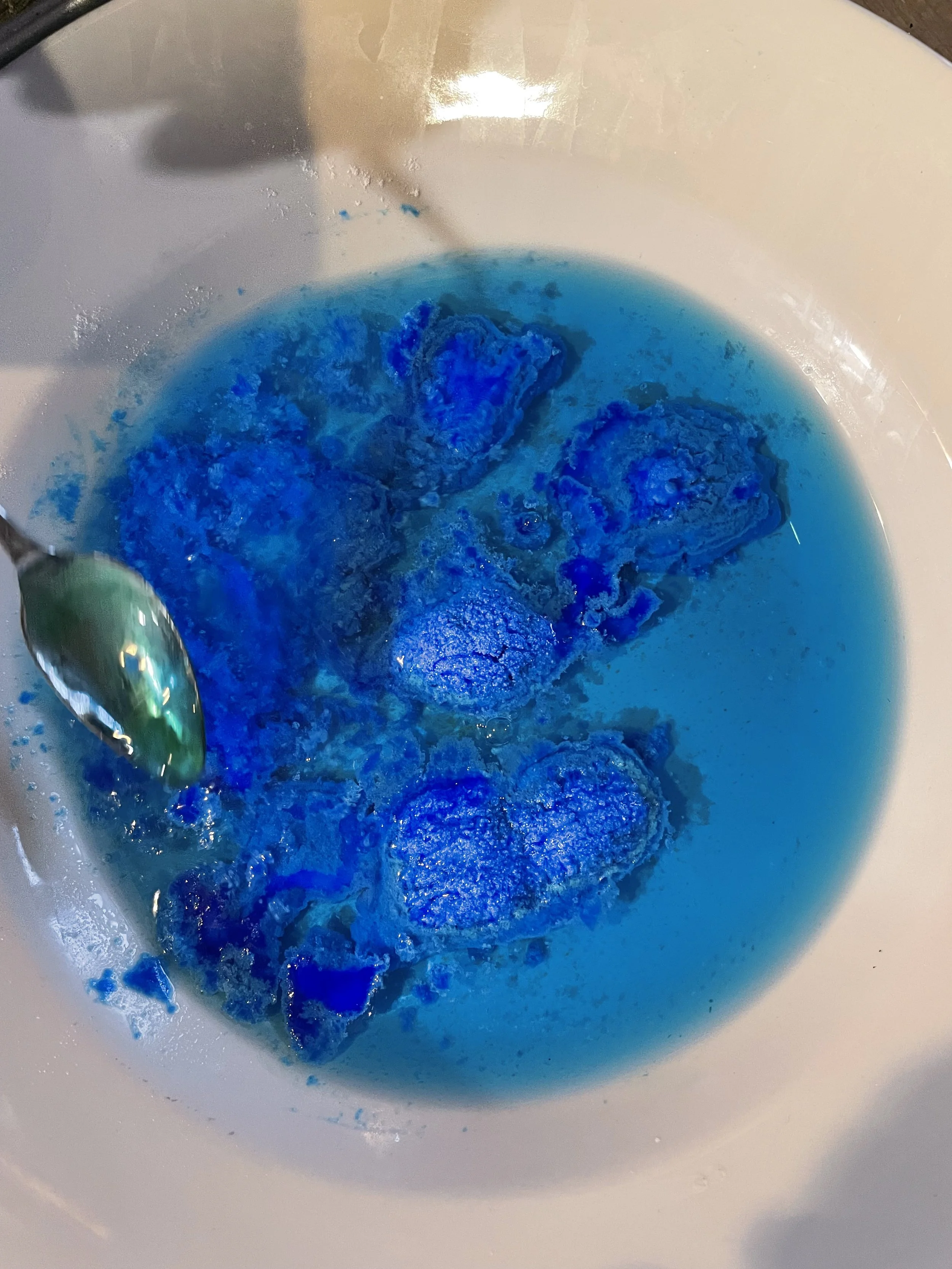
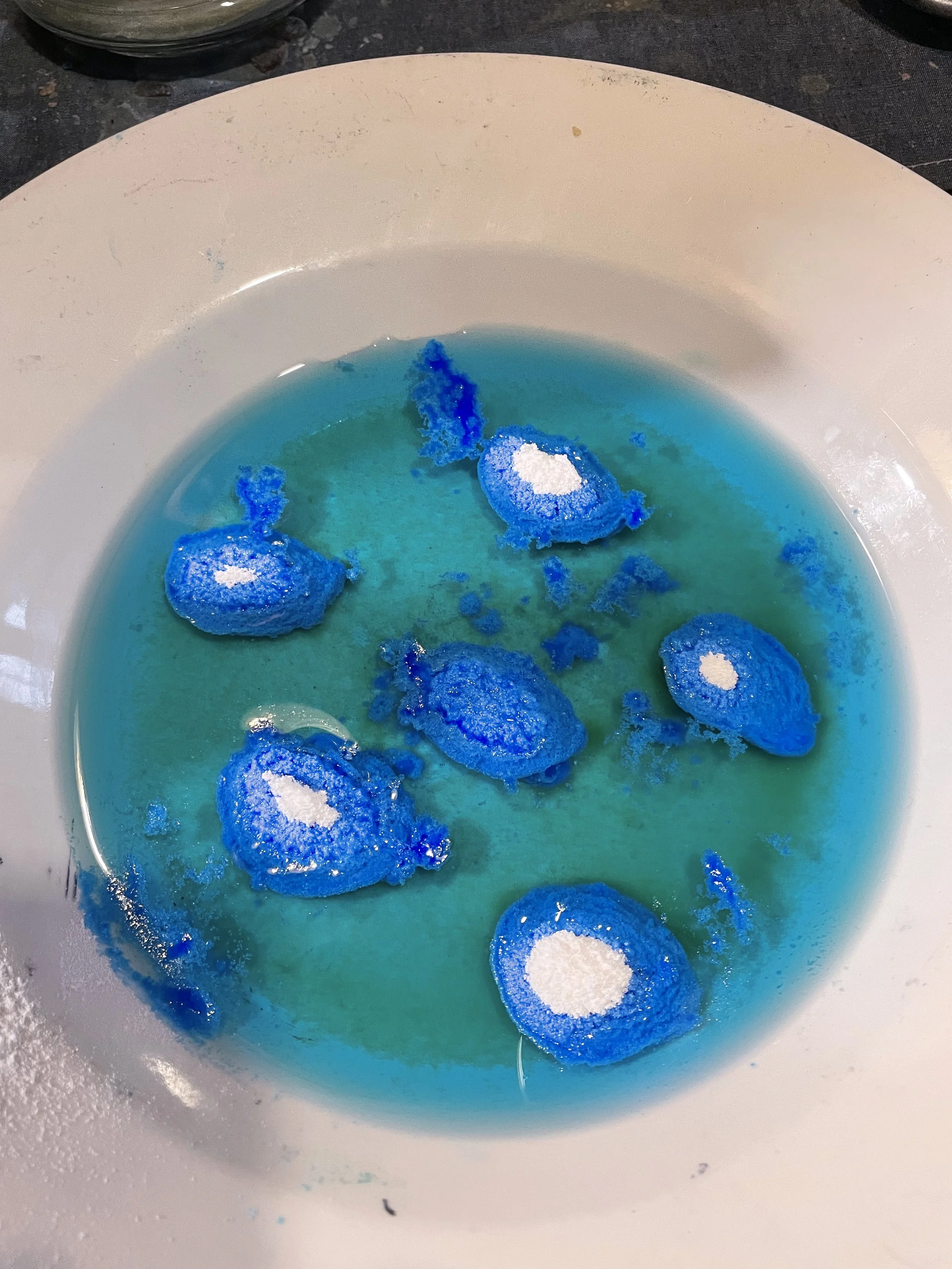
Following my visit to Mark I have been conducting my own Verditer experiments and it is certainly a most intriguing endeavour. I've been mixing various amounts and different ingredients together including copper nitrate and sodium carbonate and do indeed keep getting different outcomes even if the mix is identical. Heating the mixtures in a copper pan furthers the colour range possibilities so from the initial copper carbonate base all manner of pigments can be conjured. By doing this and witnessing the infusing of the solutions and emergence of colour it feels very connecting to processes and the lost crafts of working in such ways. The lack of predictability is very refreshing and by doing this I feel much more of an affinity with the pigments.
Interestingly on a chemical level the Verditer pigments are identical to the naturally forming minerals Azurite and Malachite which are classified as basic copper carbonates. The colours are certainly wonderful and such experiments will certainly continue.